Thursday, January 7, 2010

Many Have Seen the Star

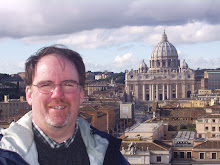
While the liturgical celebration of Epiphany has been transferred to a Sunday in the Dioceses of the United States, it is celebrated on the traditional date of January 6 in the Vatican.

Pope Benedict XVI has eloquently preached and written about the personal encounter of individuals with God--an encounter that God himself desires. The pope stresses the Church's desire that the listener recognize himself or herself in the people and events of Scripture (see Liturgiam Authenticam, 42). Thus, the Scriptures are not just about something that has already happened many centuries ago, but rather they are about how God is acting in the world today.

The Holy Father's Epiphany homily at Saint Peter's Basilica yesterday broke open the Scriptures in this very way. The Magi, he said,
were not the last but the first of the great procession of people who, through all ages of history, were able to recognise the message of the star, to follow the paths indicated by Sacred Scripture, and thus to find Him Who is apparently weak and fragile but Who, in fact, has the power to bring the greatest and most profound joy to the human heart.

He went on to say,
Many have seen the star but only a few have understood its message.

We can, then, ask ourselves why is it that some seek and find, while others do not? What is it that opens their eyes and hearts? What is lacking in those who remain indifferent, in those who show the way but do not move themselves? And we may answer that too much self-confidence, the belief they possess a perfect knowledge of reality, and the presumption of having already formulated a definitive judgement about things makes their hearts closed and insensitive to the novelty of God. They are sure of the idea they have of the world and do not allow themselves to be intimately moved by the adventure of a God Who wants to meet them. They place their trust more in themselves than in Him, and do not believe it possible that God is so great that He can become small, that he can truly draw close to us.

In the end what they lack is the authentic humility capable of submitting itself to that which is greater, but also the authentic courage which brings us to believe in that which is truly great, even if it shows itself in a defenceless Child. What they lack is the evangelical capacity to become children at heart, to be amazed and to abandon the self so as to start down the path indicated by the star, the path of God. (Translation from the Vatican News Service)

Humility is a word not often used--and even less often understood--in our culture. The word itself comes from Latin (humus, meaning earth). My personal definition, for what it is worth, comes from Saint Paul's letter to the Philippians (2:3-4).
humbly regard others as more important than yourselves,
each looking out not for his own interests, but (also) everyone for those of others.
Humility isn't groveling and it doesn't mean you are invisible. In fact, most of the time being humble is hard work, sacrificing one's own interests for the good of others because of love. As the Holy Father was suggesting, if we are humble enough to dim our own light so that we may see the star and approach it as children, in wonder, awe and joy, we will see the face of God not simply lying in a manger, but in the faces of all whom he has created and redeemed.

On a lighter note, take a minute to enjoy the wonderful Epiphany hymn, "As with gladness men of old." You'll notice that, like the Holy Father's homily, it reminds us that we too are hurrying to the manger.


Tuesday, January 5, 2010

God is Love


The First Letter of Saint John, which is assigned as the first reading for these days of the Christmas, is one of my favorites. Written towards the end of the first century, it is thought that this letter and the Gospel of Saint John come from the same school of Christian thought).
According to the introduction from the New American Bible, the author "insists that the concrete Christian life brings to life the deeper realities of the Gospel." In other words, we have to walk the talk.
The portions on love are most compelling to me. Love is not a by-product of faith...God is love! Four years ago this past Christmas Day, Pope Benedict XVI released his first encyclical which began with this famous Truth from 1 John 4:16:
God is love,
and he who abides in love abides in God,
and God abides in him.

This love, the author reminds us, comes first from God to each human being.
In this is love:
not that we have loved God, but that he loved us
and sent his Son as expiation for our sins.
The letter continues the discourse on love and the importance of loving neighbor and keeping the Lord's commandments.
These passages of Scripture are part of why I began this blog. Love, according to Saint Paul (I Cor. 13) is patient and kind, not jealous, pompous, inflated or rude, it forgives, it doesn't look out for self first, it is not quick-tempered and always rejoices in the truth. These are concrete manifestations of love, and for me they have also help to discern when I am truly expressing love and when I am not.
If "love is of God" (I John 4:7), then when we experience impatience, unkindness, hate, jealousy, rudeness or arrogance, these are not of God, because they are not love.
Pope Benedict's Encyclical, "God is Love," reminds us,
In a world in which the name of God is sometimes associated with vengeance or even a duty of hatred and violence, this message is both timely and significant. For this reason, I wish in my first Encyclical to speak of the love which God lavishes upon us and which we in turn must share with others (1).

Wednesday, December 23, 2009

The History of the Christmas Feast

The Church, since it is a living organism (the Body of Christ) continually evolves. This is sometimes most noticeable in the celebrations of the liturgical year. We sometimes forget that the Holy Spirit left no liturgical calendar with the Apostles on that First Pentecost!

Prior to the fourth century, Sunday was the primary feast in the Church. A yearly commemoration of the Pasch (Easter) was celebrated from an early time and from that came related liturgical days (Palm Sunday, Holy Thursday, Good Friday leading to the Easter Vigil, for example).

The origins of the Christmas feast are not entirely clear. According to Adolf Adam's book, The Liturgical Year, there is concrete evidence that the celebration of the birth of Christ was occurring on December 25 in Rome in 336.

But scholars are divided as to the reason for the selection of December 25 for this feast. Some believe it was to "baptize" a pagan festival of "the Unconquered Sun-God" to the the Syrian sun-god Emesa established throughout the Roman Empire in 274 (to be celebrated each year on December 25, the day of the winter solstice). After all, Jesus Christ is the Sun of Righteousness, the Light of the World, never to be conquered.

Other scholars believe that third-century Christians wished to calculate the exact date of Jesus' birth.
The Christ-as-sun symbolism that was so deep-rooted in the Christian consciousness caused them to pay special attention to the equinoxes and solstices. One opinion was that John the Baptist was conceived at the autumn equinox and born at the summer solstice. But since according to Luke 1:26 Christ was conceived six months after John, he was conceived at the spring equinox (March 25) and was therefore born on December 25. (Adolf Adam, The Liturgical Year, p. 123)

Regardless of how or why, the date of December 25th took root in the west. In the fourth century the Church was neither as centralized as it is today nor did it have the ability to communicate quickly. Still, this feast spread rapidly even to those places in the east that celebrated January 6 as the date of the manifestation of God in flesh. In fact, many calendars had both celebrations.

Today in the western Church December 25th marks the date of Christ's birth into the world. God put on human flesh and became like us in all things but sin. In the west January 6 (Epiphany) celebrates the revelation of God in Christ to all the nations.

Midnight Mass also has ancient roots, dating back to the fifth century when the pope would celebrate Mass in a chapel (designed to be a replica of the cave of Christ's birth in Bethlehem) deep beneath the basilica of Saint Mary Major.

Tuesday, December 15, 2009

Lessons and Carols

This Sunday, December 20, the Madison Diocesan Choir will present its annual Lessons and Carols at 4 p.m. in the Chapel of the Bishop O'Connor Catholic Pastoral Center. Bishop Robert C. Morlino will preside. Admission is free but all are asked to bring a non-perishable food item for the Catholic Multicultural Center food program. The O'Connor Center is wheelchair accessible.

The Service of Lessons and Carols was created in late-nineteenth century England. Today its most popular incarnation is at King's College (Cambridge, England) where the King's College Choir, founded by King Henry VI (1421-1471), presents a program each Christmas Eve which is broadcast to the world. Nine Scripture readings ("Lessons") recall salvation history, from the Fall in the Garden of Eden to Redemption in Christ Jesus. In between the Lessons the choir sings Christmas carols, anthems and motets and the congregation joins in on some popular carols.

The Diocesan Choir began this tradition in the early 1990s under the direction of dynamic conductor Jorge Gonzales. For nearly twenty years the Choir has ushered in the last week of Advent with this service, the only break coming in the Jubilee Year of 2000 when the choir performed J. S. Bach's great Magnificat in D-major (BWV 243) with the Madison Symphony Orchestra and Chorus in the newly-renovated O'Connor Center Chapel.

In recent years the Diocesan Choir has added a second performance on the Vigil of the Epiphany. This year they will sing at the Cathedral of Saint John the Evangelist in Milwaukee on Saturday, January 2, 2010.

Monday, December 14, 2009

Come, Lord Jesus! Come quickly!

Having celebrated the Third Sunday of Advent, our thoughts now turn to the final preparation for Christmas. While Advent has a dual nature--preparing to recall and celebrate the Lord's first coming as well as looking for his return at the end of time--the last days of Advent start to focus us more clearly on the former (see General Norms for the Liturgical Year and Calendar, nos. 39-42).

O Come, O Come Emmanuel has become for many people the quintessential Advent hymn. It is based on the seven O Antiphons, which are still used today as the antiphons for the Magnificat at Evening Prayer December 17-23.

For evening prayer, they follow this order:
  • O Sapientia (O Wisdom)
  • O Adonai (O Sacred Lord of Ancient Israel)
  • O Radix Jesse (O Flower of Jesse's Stem)
  • O Clavis David (O Key of David)
  • O Oriens (O Radiant Dawn)
  • O Rex Gentium (O King of All Nations)
  • O Emmanuel (O Emmanuel)

These texts date back to the earliest centuries of Christianity and, in what seems a precursor to backmasking, they are arranged to provide a hidden message. If you take the first letter of each Latin title and reverse the order, it spells: Ero cras, which at least some scholars believe was a hidden message of the hymn meaning, Tomorrow, I come!

The hymn, O Come, O Come Emmanuel, rearranges the verses and uses a translation by nineteenth-century hymn writer John Mason Neale. The origins of the tune are unclear, but it seems to date back into at least the fifteenth century.

I always find it amazing, that for centuries Christians have been calling on the Lord to come, using basically these same texts and often the same tunes. How many times has God heard this plea? How many times has the Church lifted her voice in this manner? After so many generations it may be easy for the Church to become complacent. But we know he will come when we least expect it, like a thief in the night!

I hope you enjoy the clip below. It is a setting of Veni, Veni Emmanuel by twentieth-century composer Zoltan Kodaly. Come, Lord Jesus! Come quickly!


Thursday, December 10, 2009

We go together or not at all

I sometimes hear people who consider themselves to be very orthodox Catholics disparage other Catholic people whom they judge to be un-Catholic. This seems to mirror the political divisions with the underlying presumption that if you believe something different than me you are un-patriotic or even un-American.

Division such as this is a tough issue for those of us in the Church. There are beliefs that all Catholics are called to profess. These beliefs are meant to shape the very way that we live our lives. If individuals don't accept aspects of the faith or if they don't allow these beliefs to shape their actions, they are not able to live the life to which they have been called.

At the same time we acknowledge that all are sinful and fall short of our call. People who consider themselves very holy often treat others as obstacles to their own salvation. People who feel that creed and dogma are meaningless often lack the foundation to live out their deep and faithful convictions.

So what are we to do?

Yesterday (December 9) the Holy Father appointed one of Detroit's auxiliary bishops, Daniel Flores, as the new bishop of the Diocese of Brownsville in Texas. At age 45 he is the second youngest bishop in the U.S. He seems to me wise beyond his years, as witnessed in his opening statement at a press conference yesterday.
...we walk together on the pilgrimage of life and history toward our heavenly homeland. (Hasta que en el cielo descansamos.) God calls us to an unimaginable glory, and we travel this pilgrimage of life together. We journey together with hope. We work so that no one grows too weary on this road we travel. If we leave behind anyone who might be discouraged on this road, if we do not make such a person's interests our very own, then Christ will not let us cross to the heaven he has prepared for us. We go together, or we do not go at all.

This is why unity is so important to Christians. Notice that he didn't say, "Come with me or you will be left behind" or "this is what the Church teaches and if you don't like it, you can go to another church." No. We have a responsibility to help each other.

I believe that St. Paul's metaphor of the body is a key to our understanding this. "If (one) part suffers, all the parts suffer with it; if one part is honored, all the parts share its joy" (I Cor. 12:26). We also have the parables of the lost sheep, the lost coin and, of course, the Prodigal Son (all in Luke 15). We don't ignore what separates us. Rather, we always seek reconciliation. Unity is a reality of the Eucharist.
Christ personally unites himself with each one of us, but Christ himself is also united with the man and the woman who are next to me. And the bread is for me but it is also for the other. Thus Christ unites all of us with himself and all of us with one another. In communion we receive Christ. But Christ is likewise united with my neighbor: Christ and my neighbor are inseparable in the Eucharist. And thus we are all one bread and one body. A Eucharist without solidarity with others is a Eucharist abused.

Pope Benedict XVI, General Audience on December 10, 2008

I certainly don't have all of the answers. However, the concept which I hear more and more that there should be a smaller, more faithful Church seems to deny the Eucharistic reality of unity. More faithful? Yes! Smaller? No!

Unity isn't just about bringing other people with me. It perhaps has less to do with others and more with myself. And unity isn't simply something that would make things nicer. "Unity is the essence of the Church" (Catechism of the Catholic Church, 813).
God of power and might,
we praise you through your Son, Jesus Christ,
who comes in your name.

He is the Word that brings salvation.
He is the hand you stretch out to sinners.
He is the way that leads to your peace.

Eucharistic Prayer for Masses of Reconciliation (II)


Christ (and those who bear his imprint and name) does the action. He brings salvation, reaches out to sinners and provides the road to peace. He doesn't point and say, "Salvation is over there." He doesn't look at sinners and say, "When you come over to me I will forgive." He doesn't say, "I'm going ahead, I hope you find the way."
Theologians such as Bonaventure and Thomas Aquinas do not consider this understanding of Eucharist as a sacrament of unity something trivial or arbitrary, the fruit of pious exaggeration, something that one might just be permitted to say after dealing with the dogmatic truths of the real presence and the sacrificial character of the Eucharist. On the contrary, this understanding is essential in their eyes; indeed, it is the essential truth about the Eucharist…the unity of the Church is the reason why the Eucharist exists.

Cardinal Walter Kaspar. Sacrament of Unity, pages 119-120.


This Advent would be a great time to reach out to one with whom you need to be reconciled. Be the one to stretch out your hand, to be the way of peace, to live out the reality of the Eucharist!

Friday, December 4, 2009

"This Sacred Council"

Forty six years ago today--December 4, 1963--the Constitution on the Sacred Liturgy (Sacrosanctum Concilium) [CSL] was promulgated during the Second Vatican Council. This was the first document of the Council that was approved and promulgated, and its opening lines establish the goals of the Council in general:
This sacred Council has several aims in view: it desires to impart an ever increasing vigor to the Christian life of the faithful; to adapt more suitably to the needs of our own times those institutions which are subject to change; to foster whatever can promote union among all who believe in Christ; to strengthen whatever can help to call the whole of mankind into the household of the Church. The Council therefore sees particularly cogent reasons for undertaking the reform and promotion of the liturgy.

The CSL was the first of four Constitutions promulgated during the Second Vatican Council. The others were on Divine Revelation (Dei Verbum), the Church (Lumen Gentium), and the Church in the Modern World (Gaudium et spes). Constitutions are the most authoritative documents issued by a Council. The Second Vatican Council also issued three declarations and nine decrees.

There is much division in the Church today over what the Council "really wanted" or what the documents produced by the Council "really said." While it is healthy and good to vigorously debate these important aspects of our faith, I have failed to see a real debate of these issues during the past decade. What I mostly observe is an apologia from this perspective or that, which skewers the opponent and shows the ultimate wisdom and holiness of the "correct" interpretation. In fact, one blog I visited recently referred to those who thought differently as "evil," and said that they want to bring the Church down. While we certainly have issues that must be resolved, I have to say that I have never worked with anyone, regardless of their ideology, who wanted anything less than a flourishing and vital Catholic Church!

The Constitution on the Sacred Liturgy built upon nearly a century of papal pronouncements. Pope St. Pius X (1903-14) described the necessity of the faithful's "active participation" in his motu proprio on sacred music, Tra le sollecitudine (1903). Pius XII's (1939-58) encyclical Mediator Dei (1947) speaks of the Mystical Body of Christ. During his pontificate the liturgical movement was gaining momentum. While Pope Pius severely discouraged innovation and experimentation at the local level, he allowed for limited use of the vernacular language, outside of Mass and mostly in mission lands, for some of the rites. He reformed the rites of Holy Week (1951, 1954) and reformed the calendar, eliminating all celebrations of the octaves, with the exception of Christmas, Easter and Pentecost.

Pope Pius X wrote in Mediator Dei:
The Church is without question a living organism, and as an organism, in respect of the sacred liturgy also, she grows, matures, develops, adapts and accommodates herself to temporal needs and circumstances, provided only that the integrity of her doctrine be safeguarded. (paragraph 59)

This certainly prefigures the opening of the Constitution on the Sacred Liturgy quoted above. The Constitution goes on to say:
In order that the Christian people may more certainly derive an abundance of graces from the sacred liturgy, holy Mother Church desires to undertake with great care a general restoration of the liturgy itself. For the liturgy is made up of immutable elements divinely instituted, and of elements subject to change. These not only may but ought to be changed with the passage of time if they have suffered from the intrusion of anything out of harmony with the inner nature of the liturgy or have become unsuited to it.

In this restoration, both texts and rites should be drawn up so that they express more clearly the holy things which they signify; the Christian people, so far as possible, should be enabled to understand them with ease and to take part in them fully, actively, and as befits a community. (paragraph 21)

This brings liturgical reform, 60+ years old, to its next level and has set the stage for what has followed. I think that any level-headed person sees that the reforms, though often awkwardly implemented, have been a source of grace for the Church.

In my own mind, I have seen two major issues that all of us who prepare and celebrate liturgy need to address. The first is a rather cavalier attitude toward the liturgical texts, rubrics and rituals of the Roman Rite. There is a sense that if something doesn't work or feel right, I will change it. Conversion requires the exact opposite: If something doesn't work or feel right, I must change. I think that this conversion requires a great deal of humility and trust in the Spirit. While often the most visible infractions in this area occur when a priest omits a part of the Mass or changes words, this often manifests itself quietly in the return to practices which were changed or omitted during the reforms, thus nullifying paragraph 21 of the CSL (above). (In any honest approach we have to first remove the plank from our own eye before helping our neighbor remove the speck of dust from his own!)

The second issue has to do with ongoing catechesis for the congregation regarding their important role in the liturgy.
...in order that the liturgy may be able to produce its full effects, it is necessary that the faithful come to it with proper dispositions, that their minds should be attuned to their voices, and that they should cooperate with divine grace lest they receive it in vain. Pastors of souls must therefore realize that, when the liturgy is celebrated, something more is required than the mere observation of the laws governing valid and licit celebration; it is their duty also to ensure that the faithful take part fully aware of what they are doing, actively engaged in the rite, and enriched by its effects. (CSL 11)

Notice that the liturgy's effectiveness doesn't depend on the priest, the organist, the choir, the lector, the environment, or any of the myriad of things that we fuss about. It depends on the people in the pew!

Helping people "take part fully aware of what they are doing, actively engaged...and enriched" is not easy and can't be accomplished with a bulletin article now and then. This type of catechesis requires a full-court press in the schools and religious education programs, in adult education, through homilies and, most importantly, through well-celebrated liturgy. It has been my experience that people want to know more about the liturgy and about their faith. We don't want to sell them short.

Finally, I think that we have to acknowledge some inherent tensions in liturgical norms and documents. For example, we know that the Council confirmed Latin as the language of the Roman Rite (CSL 36). At the same time it said that the people should be able to understand the liturgy with ease (CSL 21) and take part fully aware of what they are doing (CSL 11). This creates a tension and no sentence trumps another. We have to reflect on ways to reconcile these two seemingly different approaches.

So happy anniversary. Much has been accomplished but much more lies ahead.

You may want to check out this blog sent to me by a colleague: http://www.liturgicalleaders.blogspot.com/